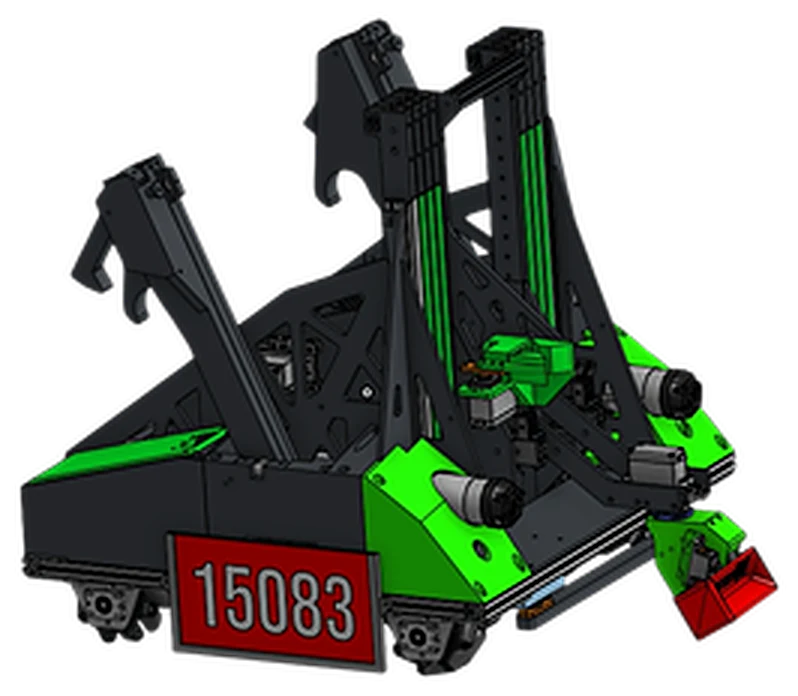
Into the Deep FTC Robot
Reaches into the submersible to pick up samples, scores them in the high basket or hangs specimens on the high chamber, then climbs to a level 3 ascent, using Kalman-filtered localization, Pedro Pathing autos and OpenCV sample detection.
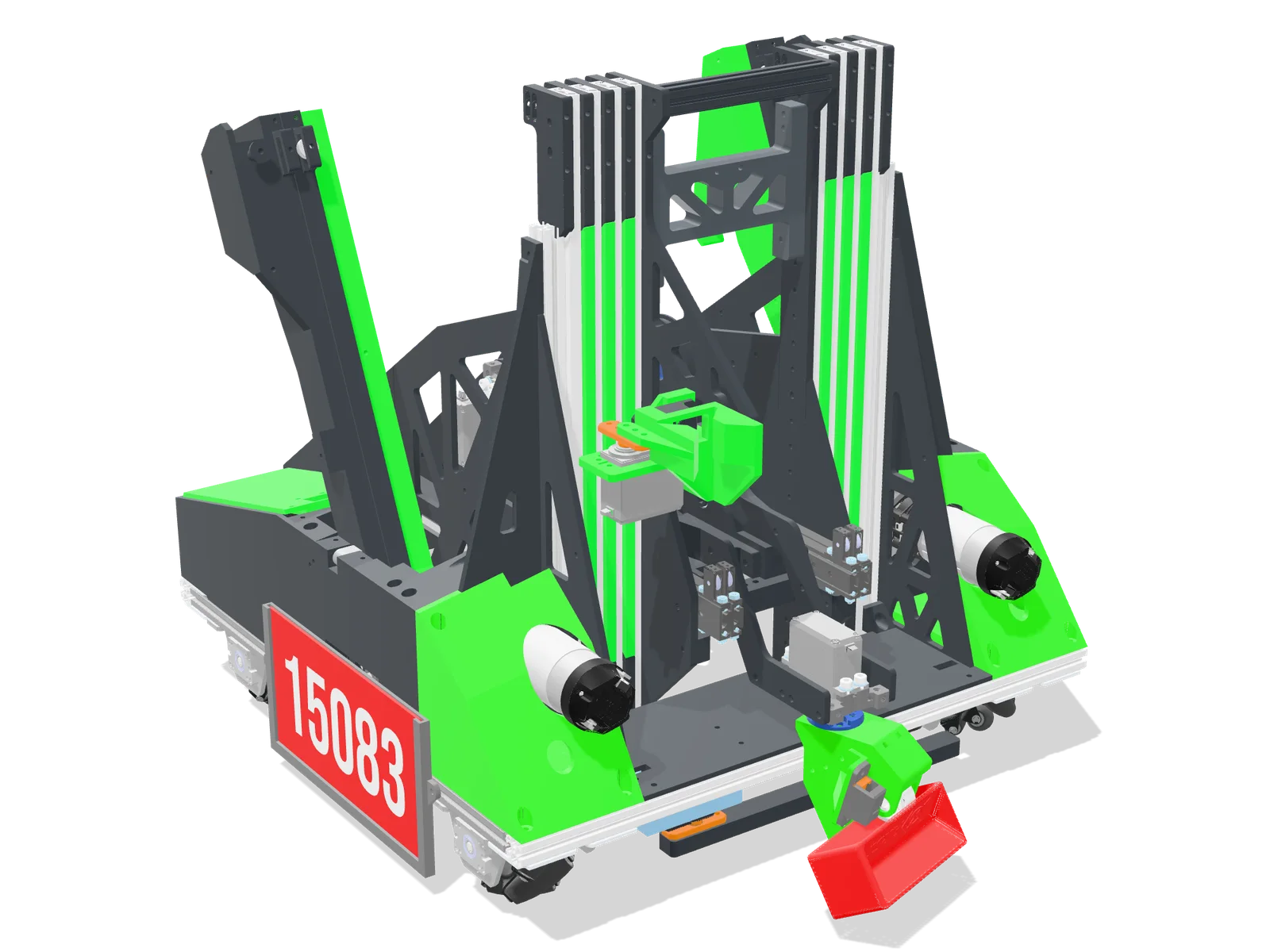
Hover over a subsystem
Full robot 01Drivetrain 02Elevator 03Laterator 04Intake 05Climber 06Localization- UIL 6A — Finalist
- Area Championship — Design Award, 1st place; playoffs
- League Tournament — Think Award, 1st place; finalist alliance (1st pick)
- Regional Qualifier — Innovate Award, 1st place; finalist alliance captain
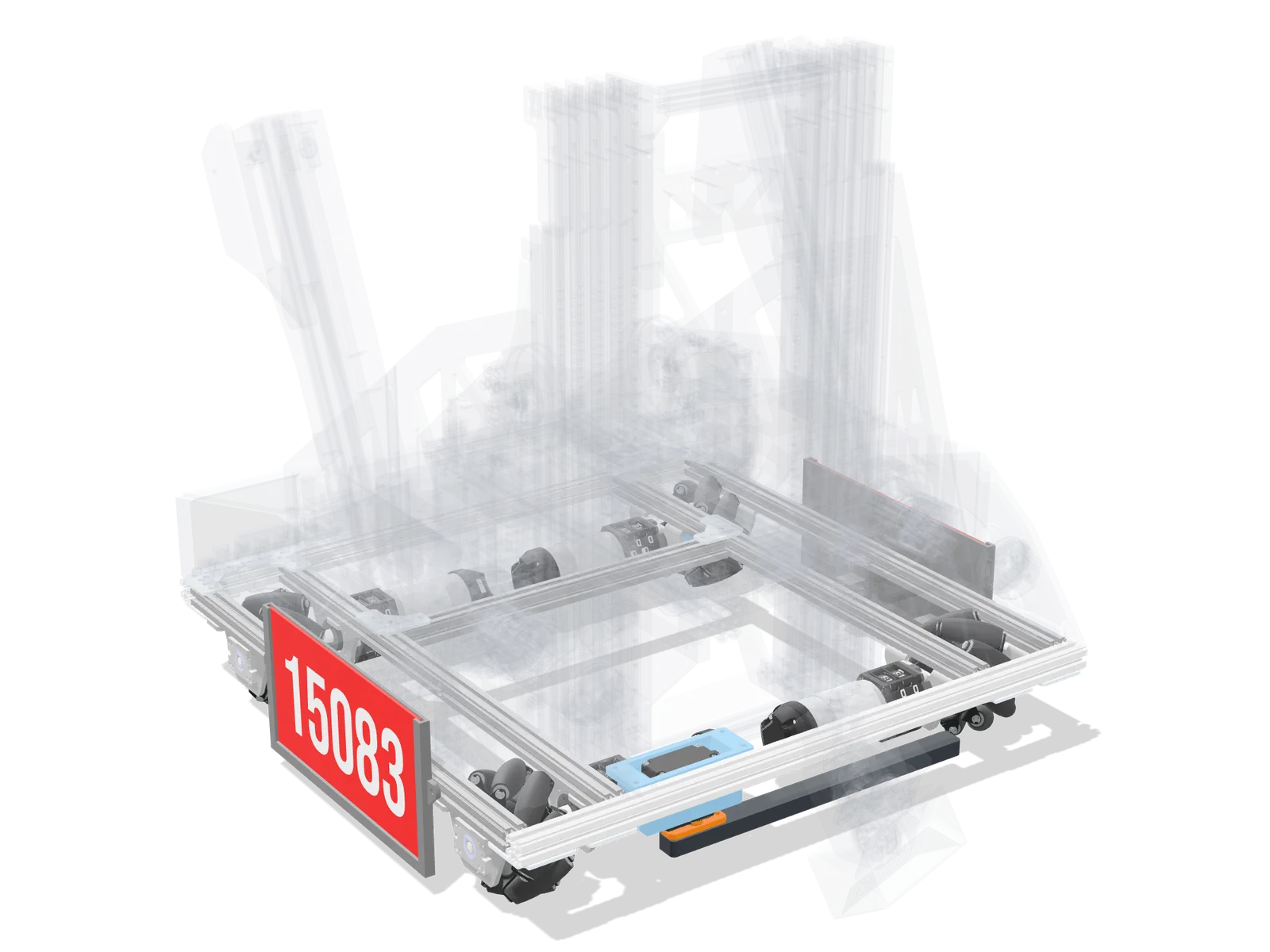
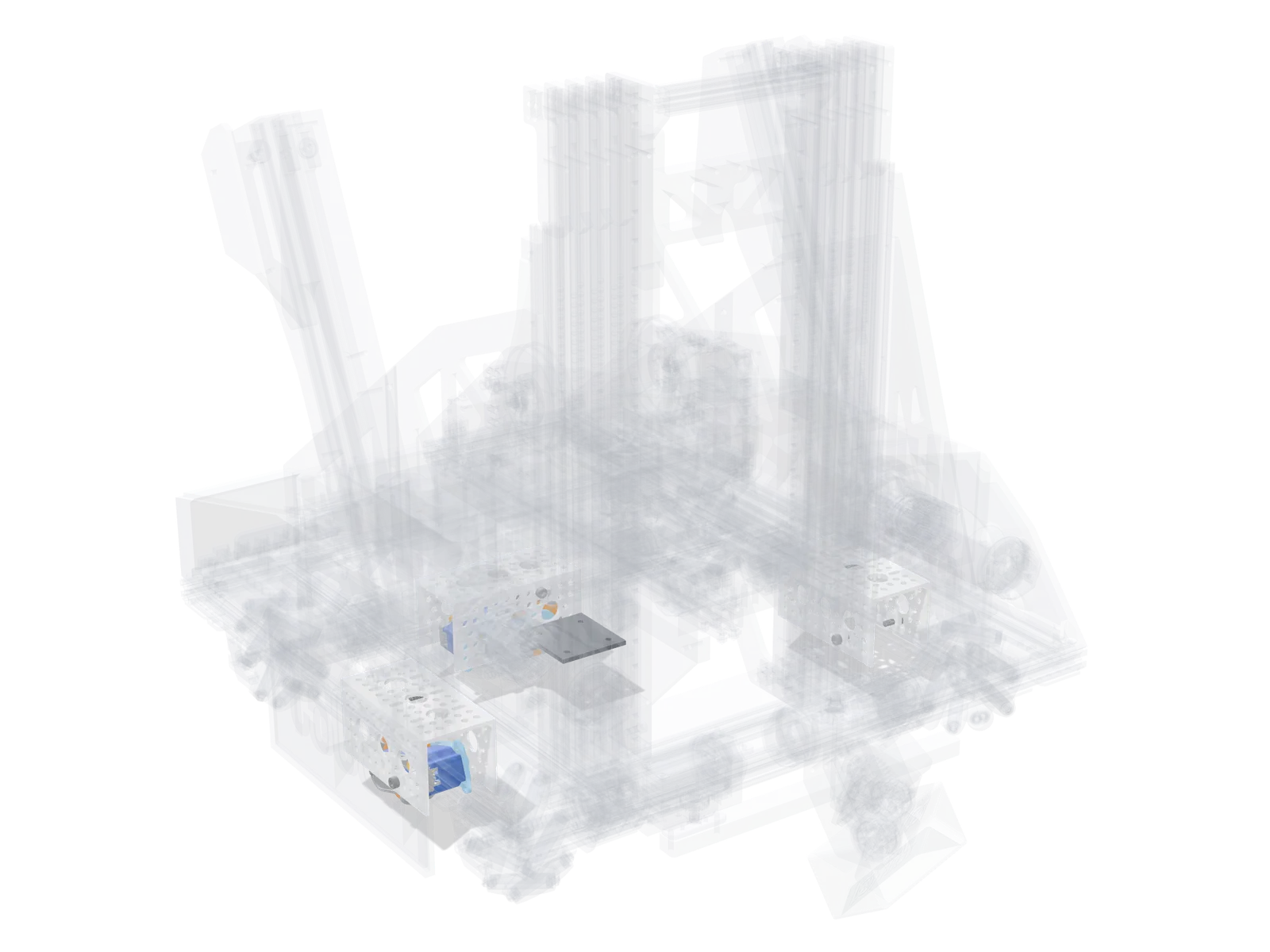
Drivetrain
Compact mecanum base with an underside sweeper.
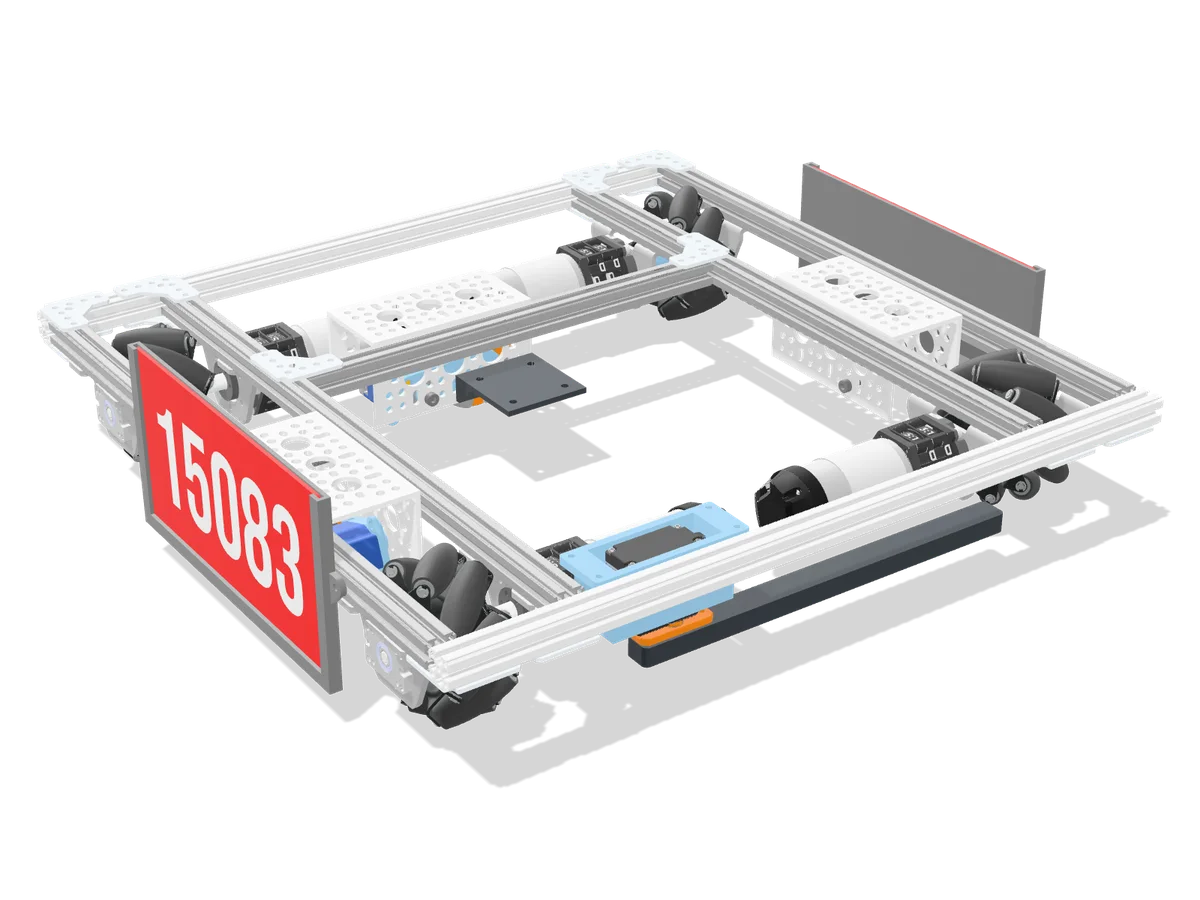
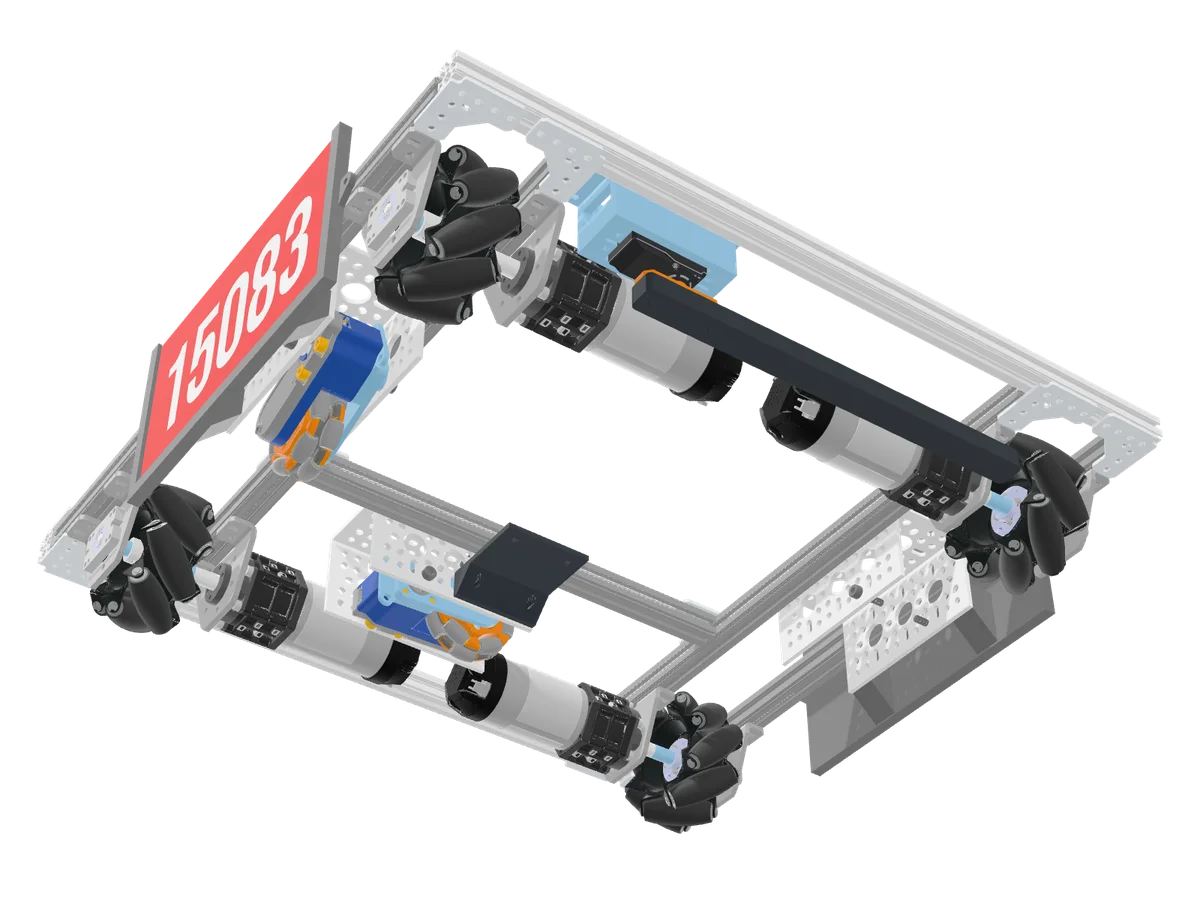
- Mecanum drive to strafe around the submersible, which takes up most of the field.
- 12:1 drive gearing.
- Servo-driven underside sweeper clears samples from under the submersible bar in auto.
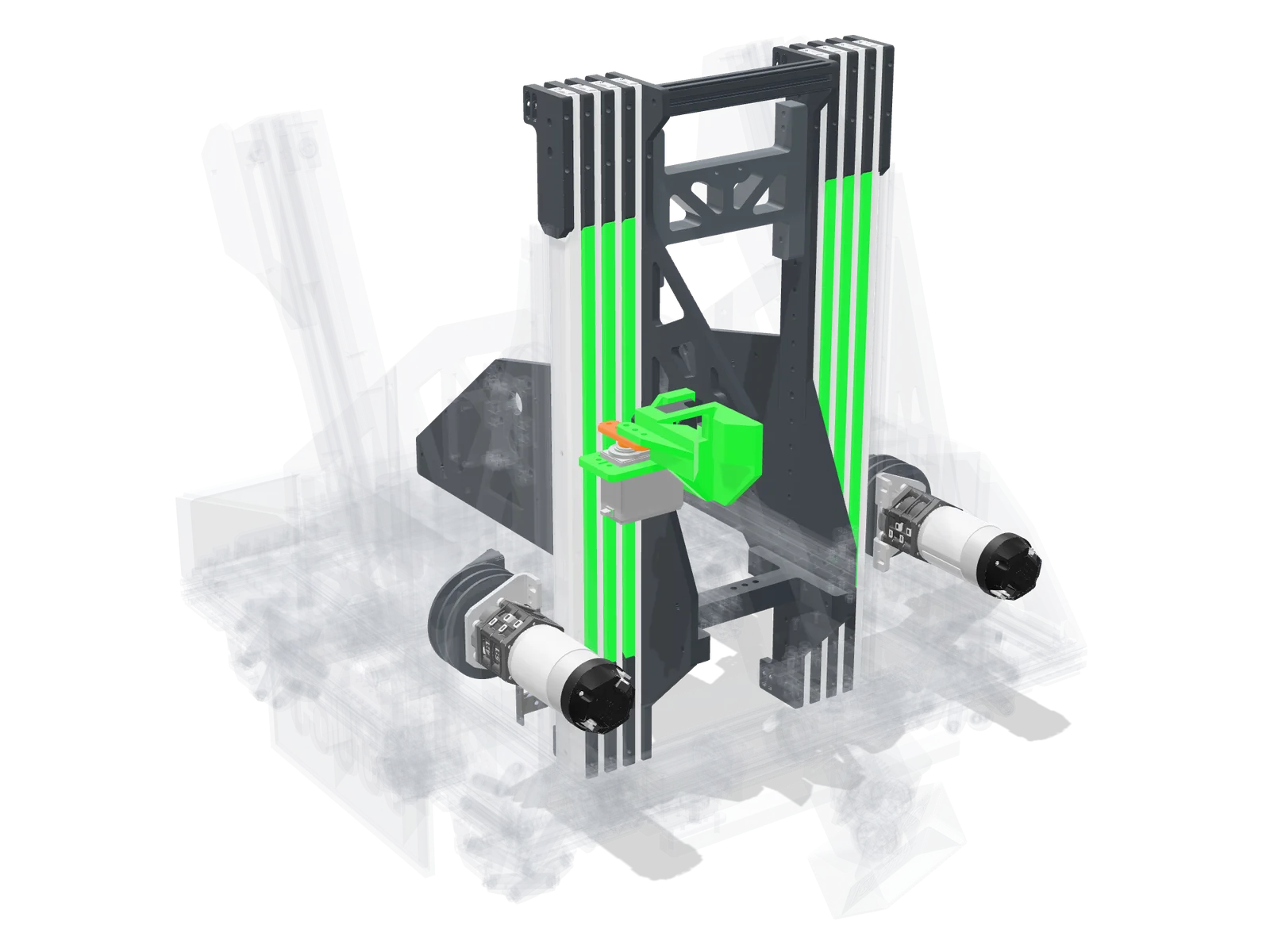
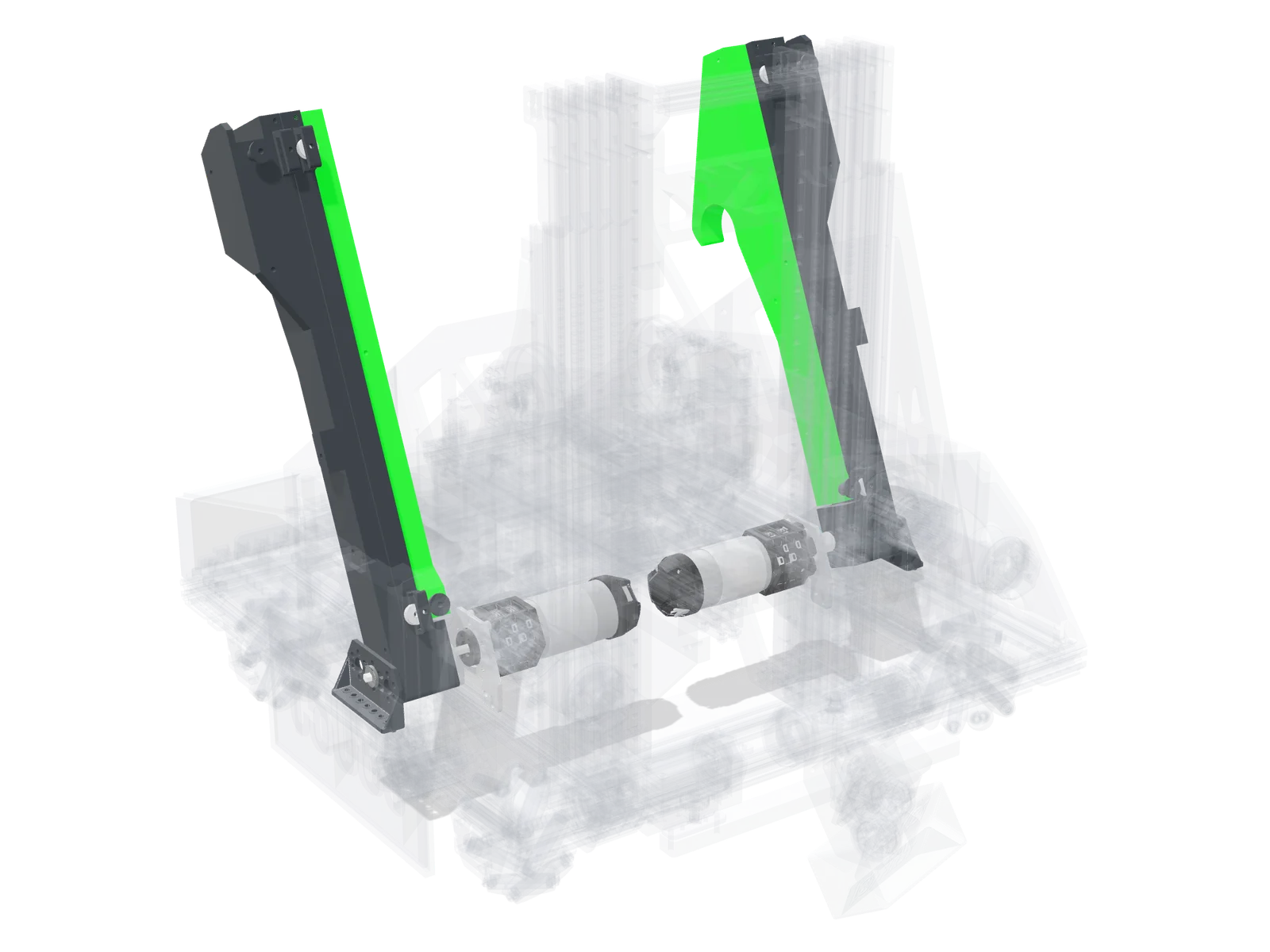
Elevator
Stacked vertical slides that reach the high basket and high chamber.
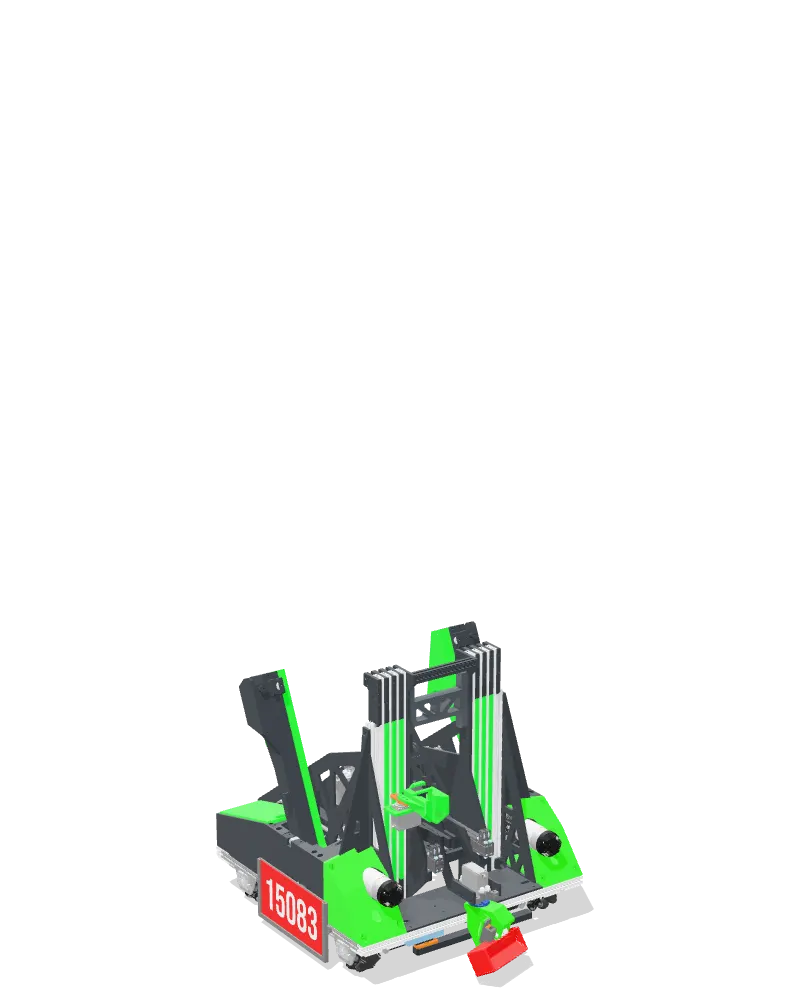
- Stacked Misumi SAR240 slides on each side, extending to over 4½ ft.
- String-driven continuous lift.
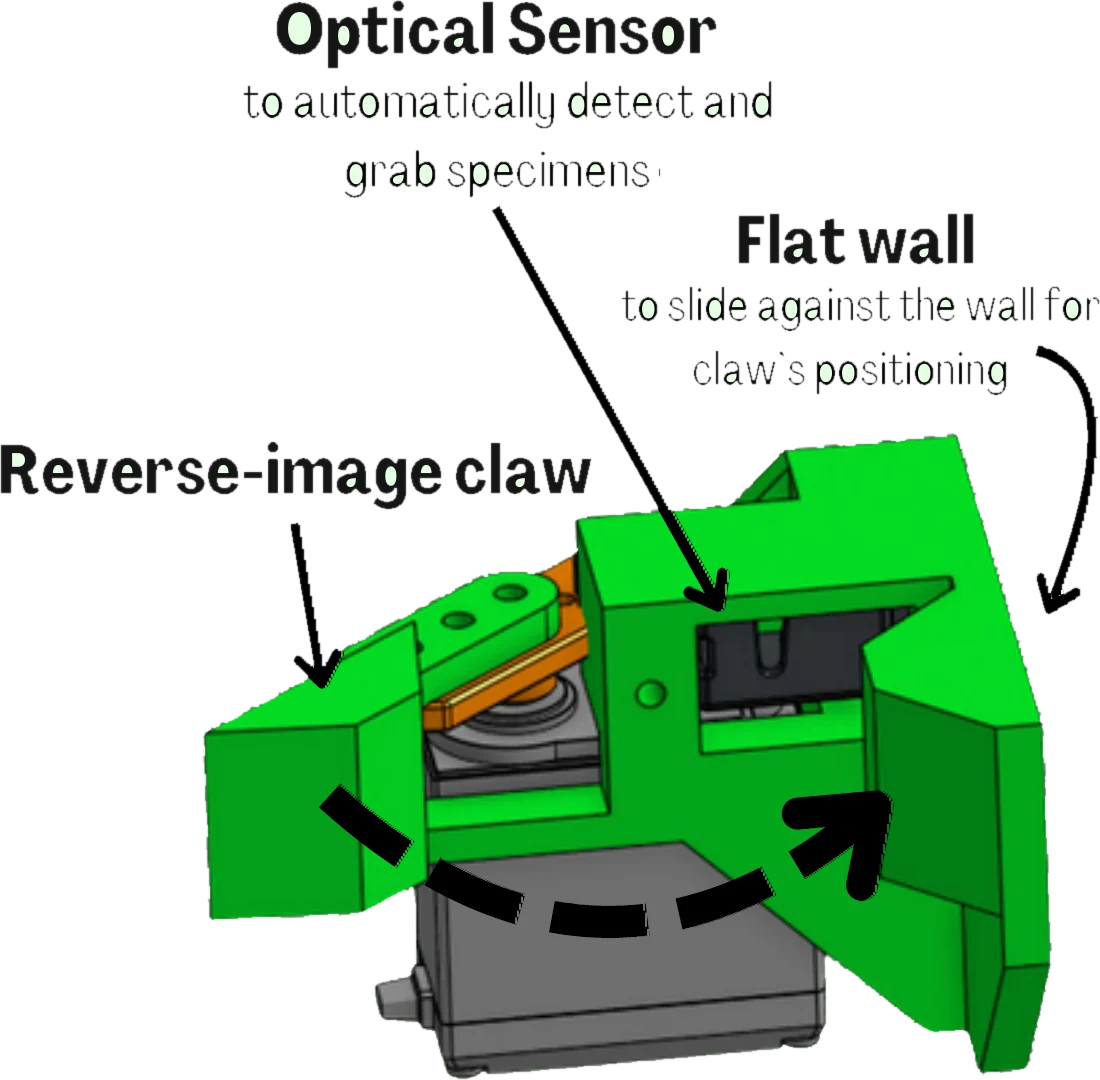
- Carries the laterator, intake and specimen claw, which closes automatically when a color sensor sees a specimen.
- Encoder positions for single-button scoring (section 07.4).
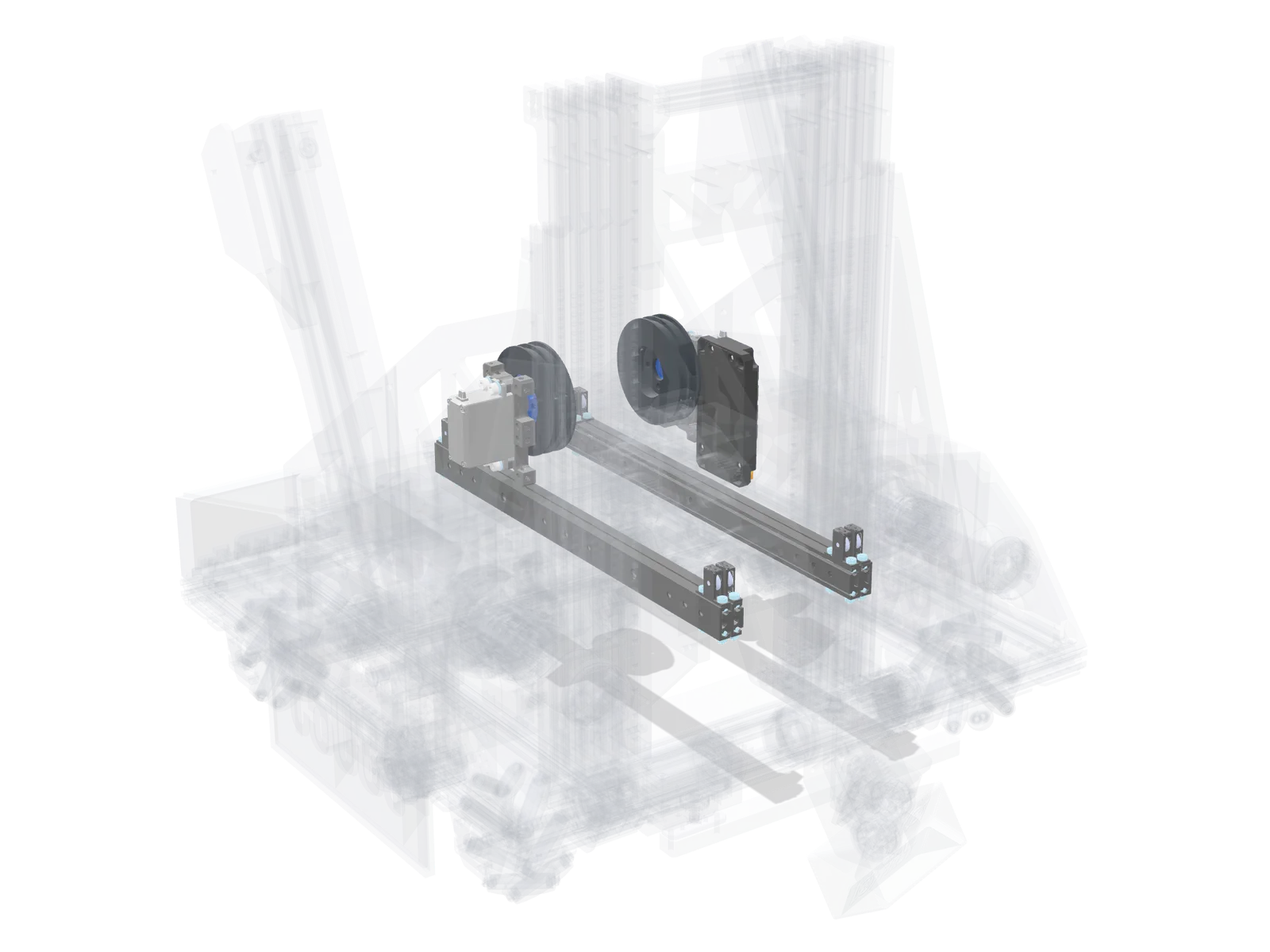
Laterator
Horizontal slides mounted on the elevator, so the robot works like a crane.
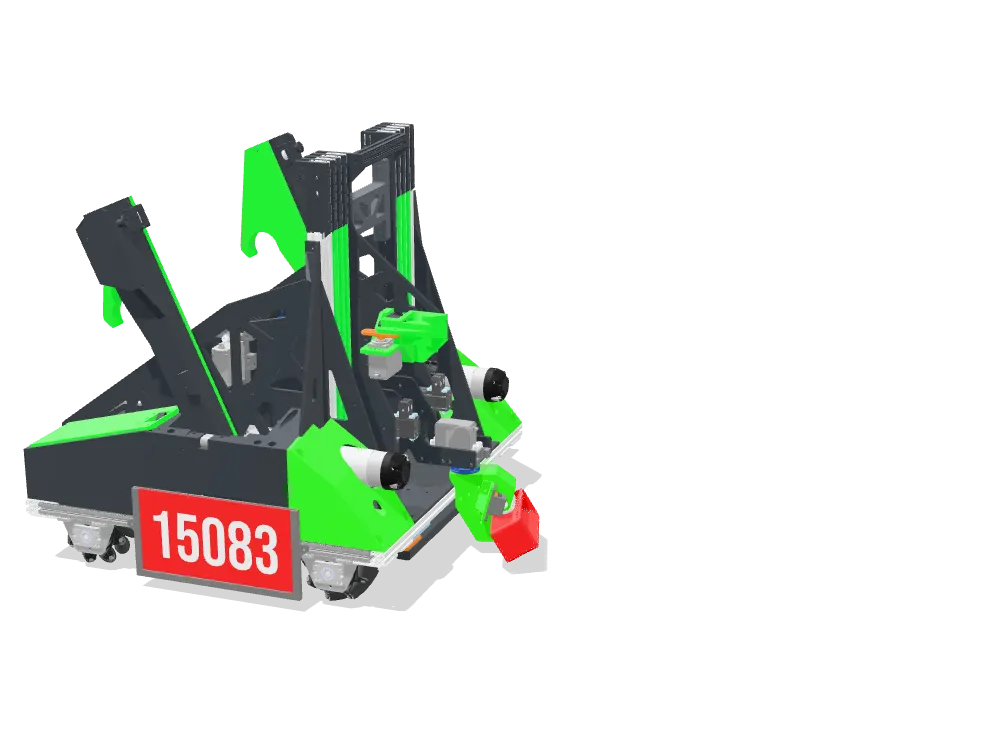
- Reaches about halfway into the submersible to grab samples, then retracts.
- Riding on the elevator means no transfer between separate mechanisms.
- Can reach over obstacles, and over an alliance partner to score.
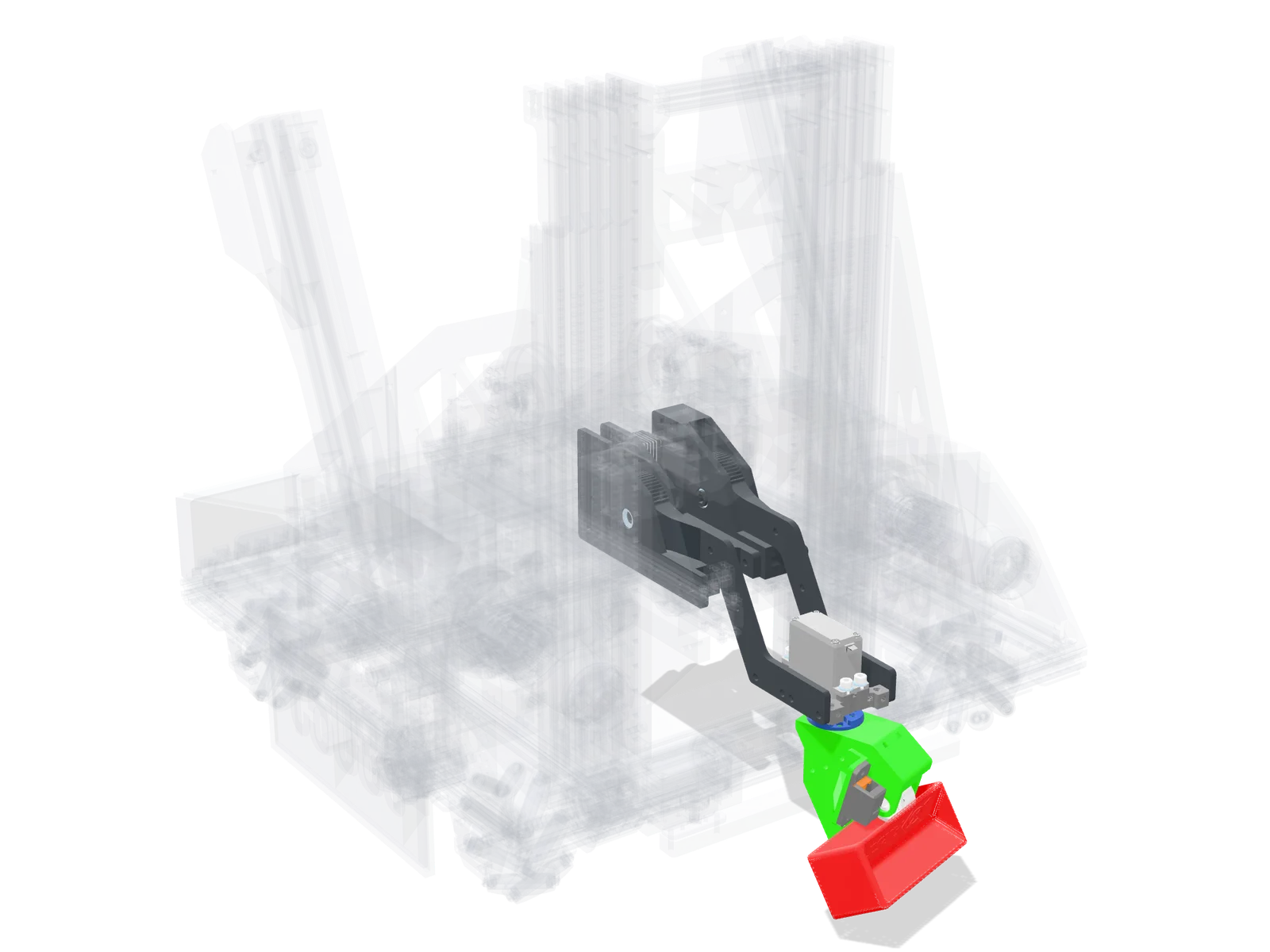
Intake
Pop-out arm with a 270° wrist and an active grip-wheel intake.
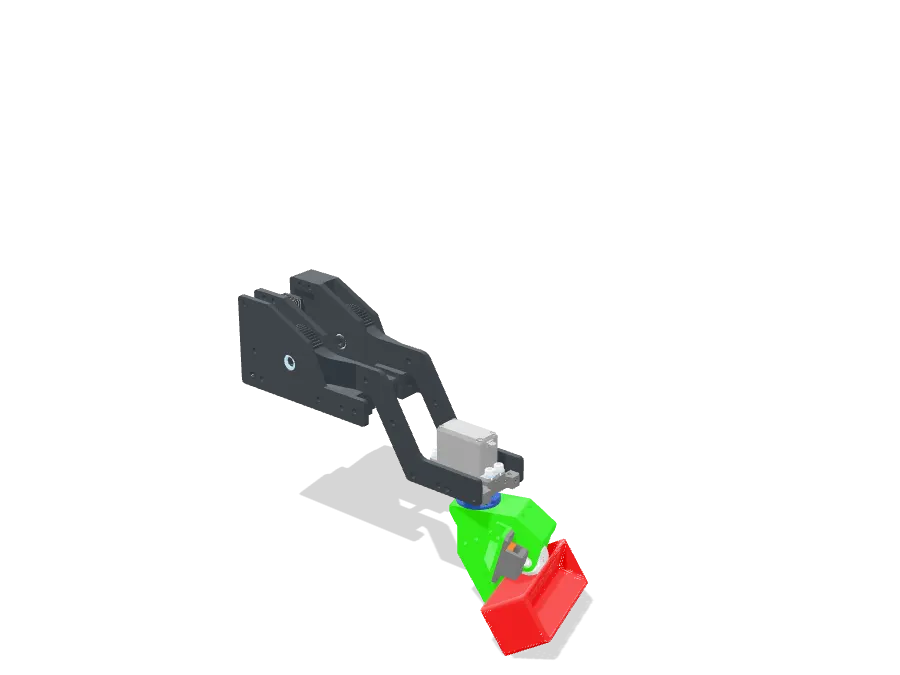
- Pop-out arm driven through a gear train that takes load off the servo spline.
- 270° wrist to pick up samples in any orientation.
- Compliant grip wheels powered by a double-helical gear train and a goBILDA servo: “touch it, own it.”
- A limit switch stows the arm automatically after a pickup.
- Pyramid claw
- Couldn't grab samples sitting next to each other
- Inverse claw
- Weak grip; couldn't pick up specimens
- Active intakeFinal
- Picks up from any direction with little driver precision
Climber
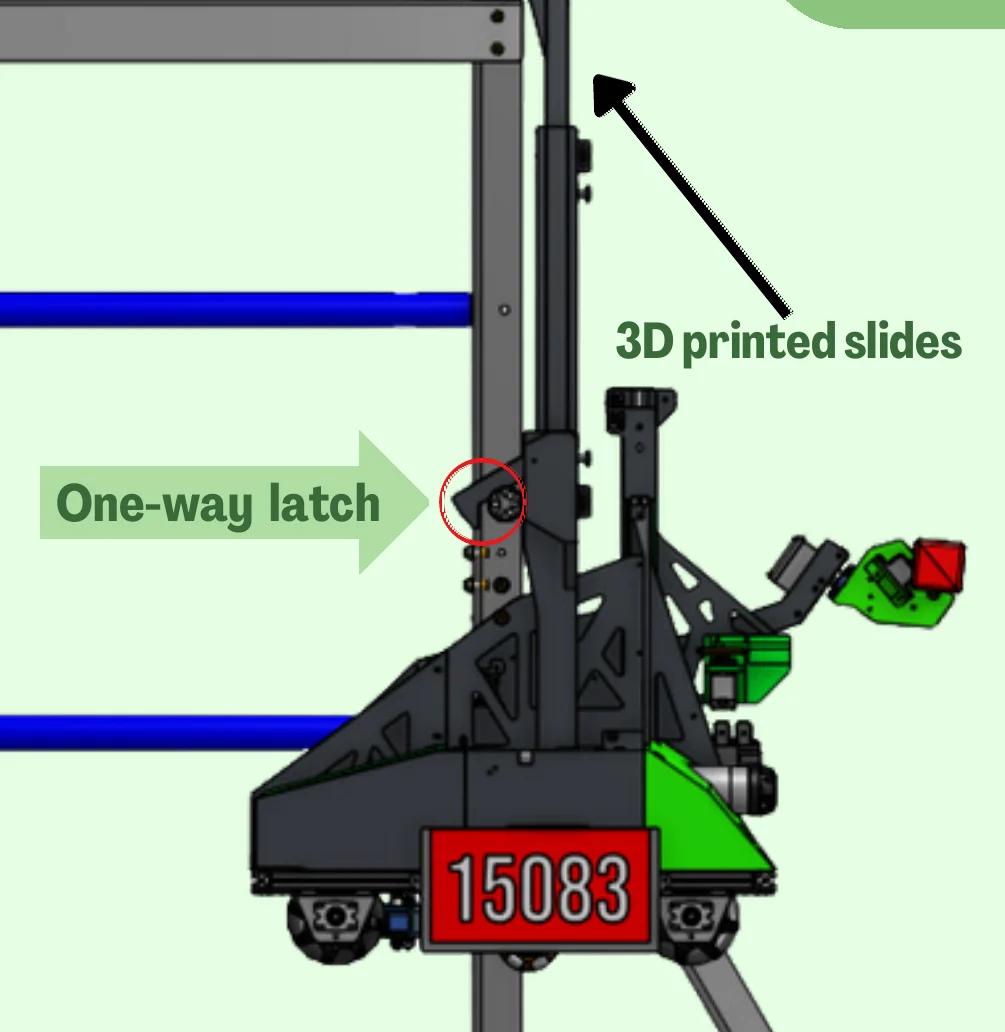
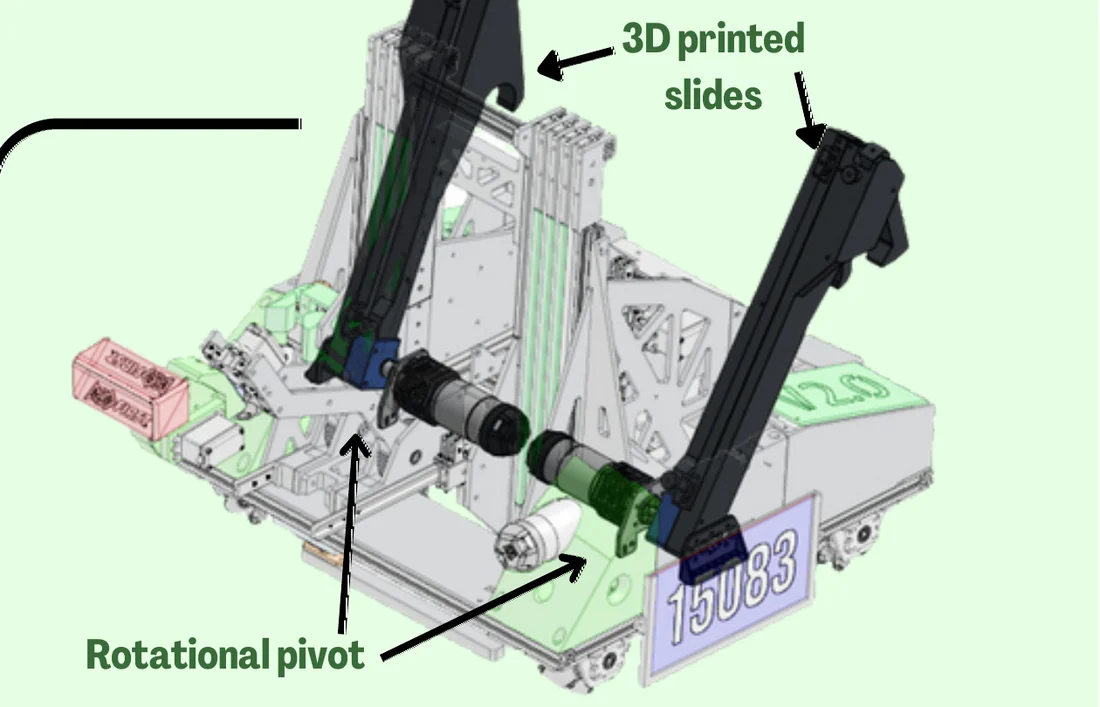
3D-printed pivoting slides for a level 3 ascent.
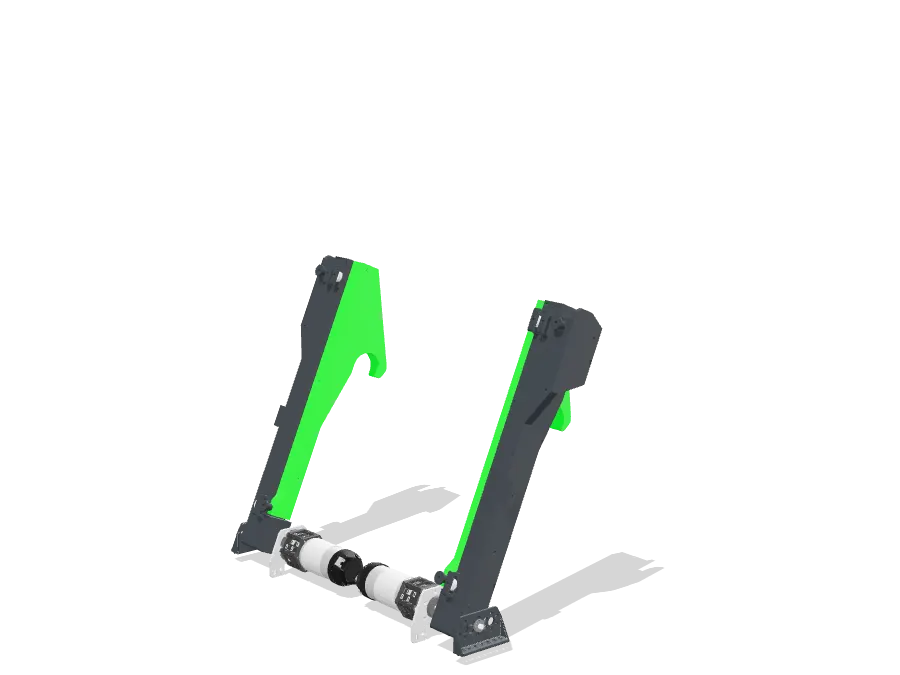
- Grab
- Hooks the low rung with the slides at an angle
- Rotate
- Slides pivot and lock vertical to shift the center of mass
- Extend and pull
- One-way latches hold the low rung while the slides reach the high rung, then the robot pulls itself up
Localization
Three dead-wheel odometry pods plus a camera for AprilTags.
- Dead wheels track the robot's real movement, so wheel slip and collisions don't throw off its position.
- A camera reads AprilTags around the field to correct odometry drift.
- A Kalman filter fuses the two measurements, weighting each by how much error it carries, for a position more accurate than either alone (section 07.2).
Software
Averaged about 13 samples in the high basket or 10 specimens on the high chamber per match, with a top 2% OPR and one of the highest scores in Texas.
Autonomous
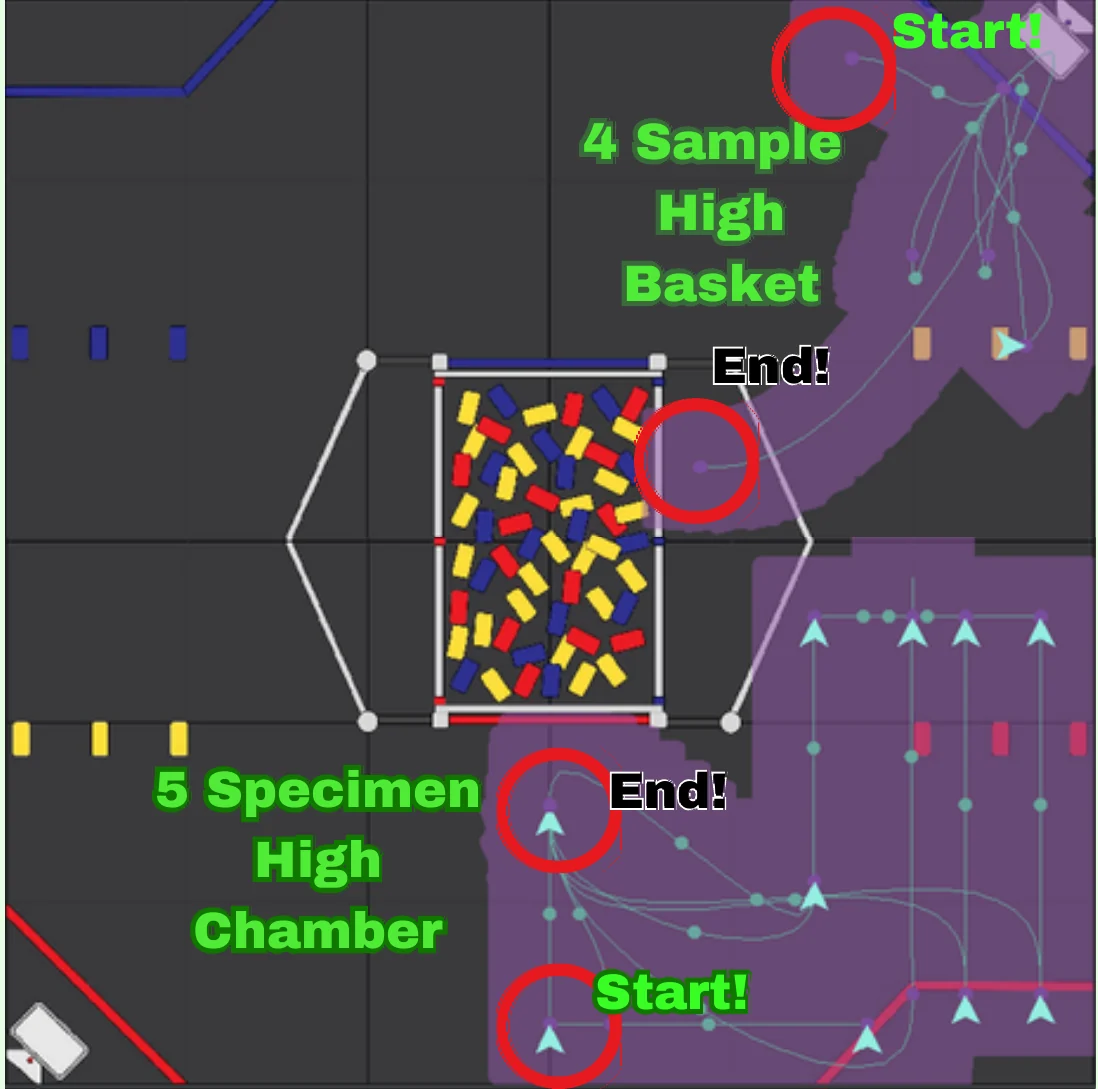
- Pedro Pathing: paths drafted, simulated and timed in Pedro's path generator.
- 4-sample high-basket and 5-specimen high-chamber autos, with time left over.
- Several programs so we fit any alliance partner's auto.
- Paths are built from Hermite splines through waypoints, giving smooth, continuous motion between scoring positions.
- Sensors close the loop: odometry corrects the path in real time, and the color sensor and limit switch confirm each pickup before the robot moves on.
- \(p_0,\ p_1\)
- start and end waypoints
- \(m_0,\ m_1\)
- tangents (heading and speed) at each waypoint
- \(t\)
- progress along the segment, 0 to 1
Localization
Odometry drifts about 3% and depends on a known start; AprilTags are accurate but not always visible. A Kalman filter weights each source by its error, leaning on AprilTags when they're close or available, which takes odometry error from 3% to nearly zero.
- \(\hat{x}_{k|k-1}\)
- prior estimate (odometry)
- \(z_k\)
- AprilTag measurement
- \(K_k\)
- gain: how much to trust the tag
Sample detection
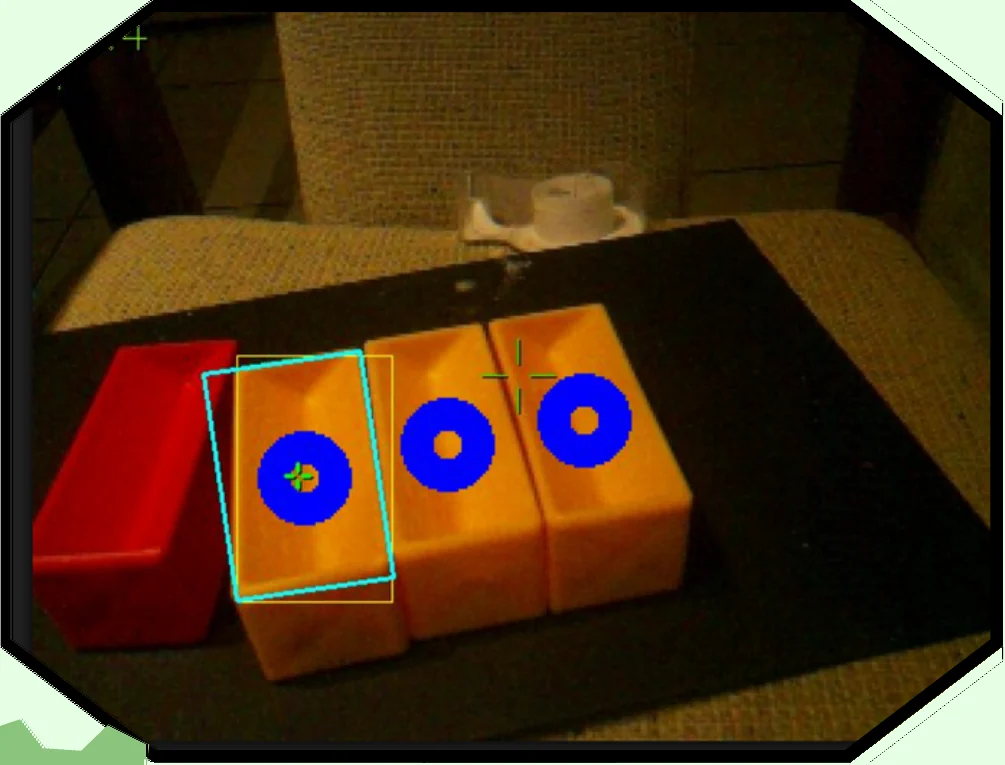
- OpenCV pipeline (in development during the season) finds dense patches of yellow, red or blue pixels in the webcam feed.
- Draws bounding boxes and picks the nearest sample in the submersible.
- The robot collects it to score, or hands it to the human player to become a specimen.
Driver automation
- Single-button scoring: encoder setpoints for the slides and climber hooks, combined with on-the-fly path generation and auto-drive.
- Localization runs in teleop too, enabling zone-specific settings like lower speed near the baskets.
- The specimen claw's color sensor closes the claw and raises the elevator automatically, saving about 2 s per cycle.
- The climber detects current spikes to prime its hooks consistently.
- Field-centric driving from the IMU, so the driver can rotate and translate at once.
State machines
Each mechanism's behavior is a finite state machine: defined states (driving, intaking, scoring) with clear transitions on inputs and sensor events, instead of long chains of if-statements. That makes autonomous routines more predictable and reliable.
Iterations
-
Meets 1–313–4–1
- Level 2 hang arms and a claw intake
- 1st, 2nd and 2nd place
-
Regional Qualifier5–1–0
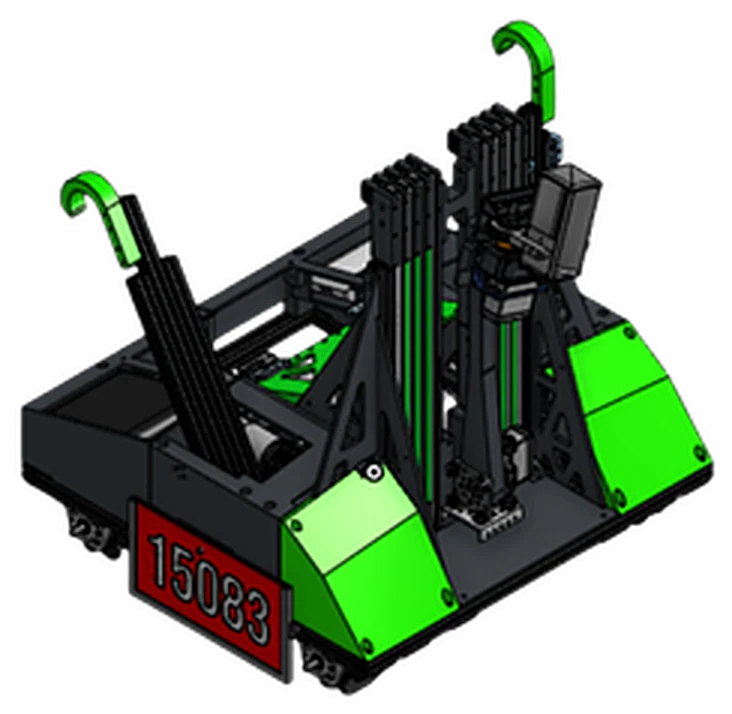
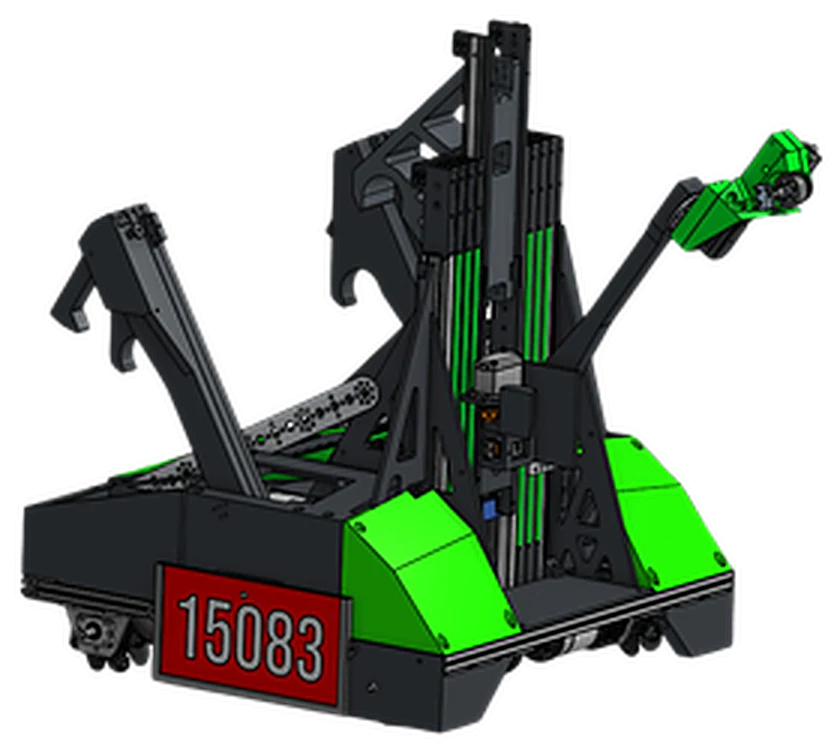
- Geared arm and new 3D-printed climbing slides
- Finalist alliance captain; Innovate Award
-
League Tournament5–1–0
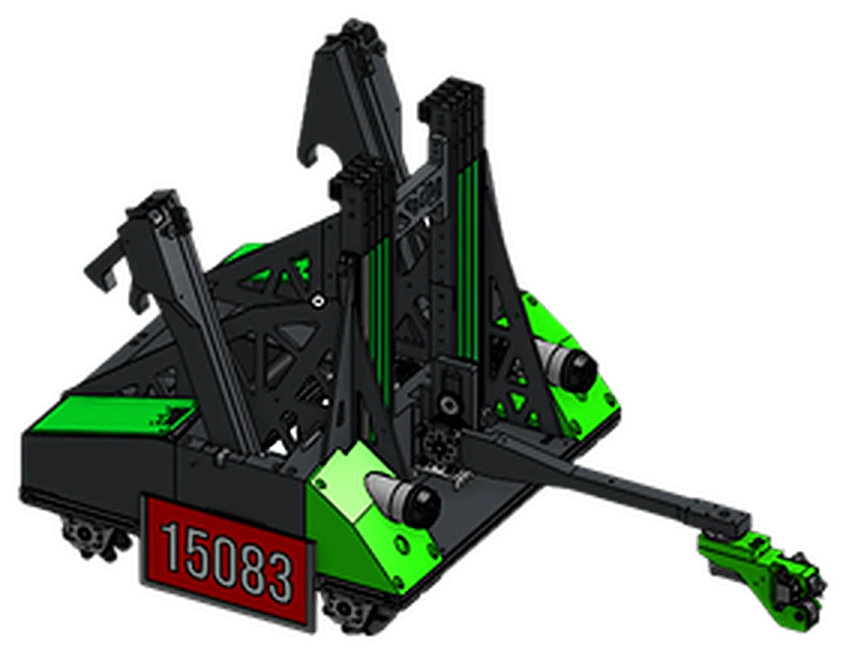
- Two-wheel intake, wider slide spacing, more consistent hang
- 4th in qualifications; Think Award
-
Area Championship4–3–0
- Added the laterator (“extendo”) for longer reach into the submersible
- Playoffs; Design Award